Maybe your doctor brought it up after the second antidepressant didn’t work. Maybe a friend tried it. Either way, you’ve heard of TMS, and you’re not totally sure what it does.
That’s a fair place to be. “Magnetic brain stimulation” sounds like science fiction until someone walks you through it. So this page does exactly that, in plain language: what TMS actually does in the brain, what a session feels like, and why it works for depression.
What Is TMS Therapy?
TMS stands for transcranial magnetic stimulation. It’s an FDA-cleared, non-invasive treatment for depression that uses magnetic pulses to stimulate the parts of the brain involved in mood regulation.
No medication. No anesthesia. No recovery time.
TMS is usually recommended when one or more antidepressants haven’t worked, or when the side effects of medication were too much to live with.
What’s Actually Happening in the Brain During TMS?
In many people with depression, an area near the front of the brain called the left dorsolateral prefrontal cortex is less active than it should be. This region helps regulate mood, and it has strong connections to deeper brain areas involved in emotion.
The TMS coil sits against your scalp over that area. It produces brief magnetic pulses that pass painlessly through the skull and create small electrical currents in the brain tissue underneath. Those currents cause the underactive neurons to fire.
One session doesn’t rewire anything. The effect comes from repetition. Stimulating the same network day after day encourages neuroplasticity, the brain’s ability to strengthen and reorganize its connections. Over several weeks, activity in the mood network becomes more balanced, and for many people, symptoms ease.
What Happens During a TMS Session?
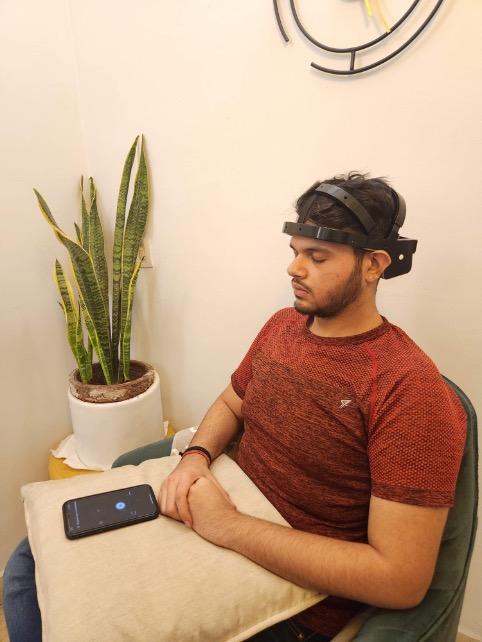
You sit in a reclined chair, a bit like a dentist’s chair. You stay awake the whole time. No sedation is needed.
The coil is positioned against your head. When the pulses start, you’ll hear a clicking sound and feel a tapping on your scalp. Most people find it strange at first and routine by the end of the first week.
Sessions last anywhere from about 3 minutes to 40 minutes, depending on the protocol. When it’s over, you can drive yourself home or go straight back to work.
How Many TMS Sessions Are Needed?
A standard course is five sessions a week for about six weeks, usually around 30 to 36 treatments in total, including a short taper at the end.
Some people start to notice changes in weeks two or three. Others don’t feel much until closer to the end. Both are normal, which is why finishing the full course matters.
After treatment, some people stay well for a long time. Others have symptoms return months later and do well with a few maintenance sessions.
Here’s how it works at A Better Day Psychiatry:
- Free 15-minute consultation. A quick call to talk through whether TMS might be a fit and how the process works.
- Psychiatric evaluation. A full review of your psychiatric and medical history to confirm TMS is safe and appropriate for you. If it isn’t the right fit, you still leave with treatment recommendations.
- Treatment on our Magstim Horizon 3.0 with StimGuide. This navigation-guided system helps place the coil in the same precise spot every session. Before treatment starts, we measure your motor threshold to set the right dose for your brain.
- Progress tracking. We use rating scales every two weeks and check in with your provider anywhere from weekly to every few weeks, so we can see what’s changing.
- Wrap-up visit. At the end of your course, you’ll meet with your provider to review how it went and plan next steps, including maintenance TMS if it’s ever needed.
Types of TMS Protocols
Repetitive TMS (rTMS)
This is the most common and most studied form of TMS. It delivers high-frequency pulses to the left prefrontal cortex in sessions of roughly 20 to 40 minutes.
Deep TMS (dTMS)
Deep TMS uses a different coil design, worn like a helmet, to reach deeper and broader areas of brain tissue. It’s FDA-cleared for depression and OCD. We don’t offer deep TMS at ABD, but our device is also FDA-cleared for OCD.
Theta Burst Stimulation (TBS)
Theta burst is a newer protocol that delivers pulses in rapid patterned bursts. Sessions can be as short as 3 minutes, and some accelerated schedules fit several sessions into a single day. Research so far shows results comparable to standard rTMS.
At ABD, we offer rTMS, theta burst (including intermittent theta burst, or iTBS), and accelerated TMS. Which one makes sense for you depends on your evaluation and treatment plan.
How Effective Is TMS for Depression?
TMS works best for the people who need another option most. Among people whose depression hasn’t improved with medication:
- About 50 to 60% see their symptoms drop by half or more
- About 1 in 3 reach full remission after a complete course
Those numbers are especially meaningful because this is a group that has often already tried two, three, or more medications without enough relief.
Wondering how it feels day to day? Read our guide to TMS therapy side effects.
Who Is TMS Therapy For?
TMS may be a good fit if you:
- Are an adult with major depressive disorder and haven’t gotten enough relief from antidepressants
- Had medication side effects you couldn’t tolerate
- Would rather try a treatment that doesn’t involve medication
TMS isn’t recommended for people with certain metal implants in or near the head, a history of seizures, or some other medical conditions. Your evaluation will screen for all of this before anything starts.
Learn more about our TMS therapy program and our adult psychiatry services.
How TMS Differs from ECT
People sometimes confuse TMS with electroconvulsive therapy (ECT). They’re very different treatments.
ECT is done under general anesthesia and works by inducing a brief, controlled seizure. It remains one of the most effective treatments for severe depression, but it can cause short-term memory problems, and it requires recovery time after each treatment.
TMS doesn’t involve anesthesia or seizures. It’s done in an outpatient office, you’re awake the whole time, and it doesn’t carry the memory and thinking side effects associated with ECT. That makes it a practical option for a much wider range of people, including those who need to keep working while they get treatment.
Common Questions About How TMS Works
Does TMS hurt?
Not for most people. The tapping on your scalp can feel uncomfortable at first, and some people get mild headaches early on. Our navigation-guided device uses shorter pulse widths, which helps keep discomfort down.
How long does it take for TMS to work?
Many people notice changes around weeks two to four. For others, the biggest shift comes near the end of the course or in the weeks after it ends.
Is TMS covered by insurance?
In most cases, yes. Insurance plans usually require a diagnosis of major depression and at least two medication trials that didn’t work. We handle the prior authorization with your insurance before treatment begins. Payment plans and financing are also available, so call our office if you have questions.
Can TMS be used alongside antidepressant medication?
Yes. Many people stay on their current medication during TMS. Your provider will talk with you about whether to make any changes before, during, or after treatment.
How is TMS different from medication for depression?
Medication circulates through your whole body, which is why it can cause side effects like weight gain, sexual problems, or fatigue. TMS works directly on a targeted area of the brain, so its side effects mostly stay at the treatment site and fade over the first week or two.
Could TMS Be the Right Next Step for You?
If you’ve tried medication and you’re still not where you want to be, that’s not a dead end. TMS works on the brain directly, without adding another pill to the mix, and it helps a lot of people who had started to lose hope that anything would. The process starts with a free 15-minute consultation, so there’s no commitment to find out if it fits. We’ll give you a straight answer either way.